


This year, I'm moving closer to the subjects that disturb. And if they disturb it's not because I'm provocative. It's just because they expose the mechanics of power.
As I told you in the previous letter, in 2026 I'm going to focus on systems, structures, architectures.
As a consequence, I'll be less active on social medias. The newsletter continues, that doesn't change. What changes is the level of depth.
I will focus on subjects that operate where responsibility dissolves, where action becomes unavowable.
And this is where mercenaries appear...
TL;DR
1- What are mercenaries, really?
2- Language as the first layer of denial
3- Bastards, is the word I use
4- What are cognitive mercenaries (the invisible layer)
5- Intelligence: from institution to market
6- Why I decided to talk about this now
7- Conclusion: the mercenary is the system's mirror
It's strange: mercenaries are everywhere...
They are heroes in our movies, central figures in our myths, and yet, in reality, they are perpetually despised.
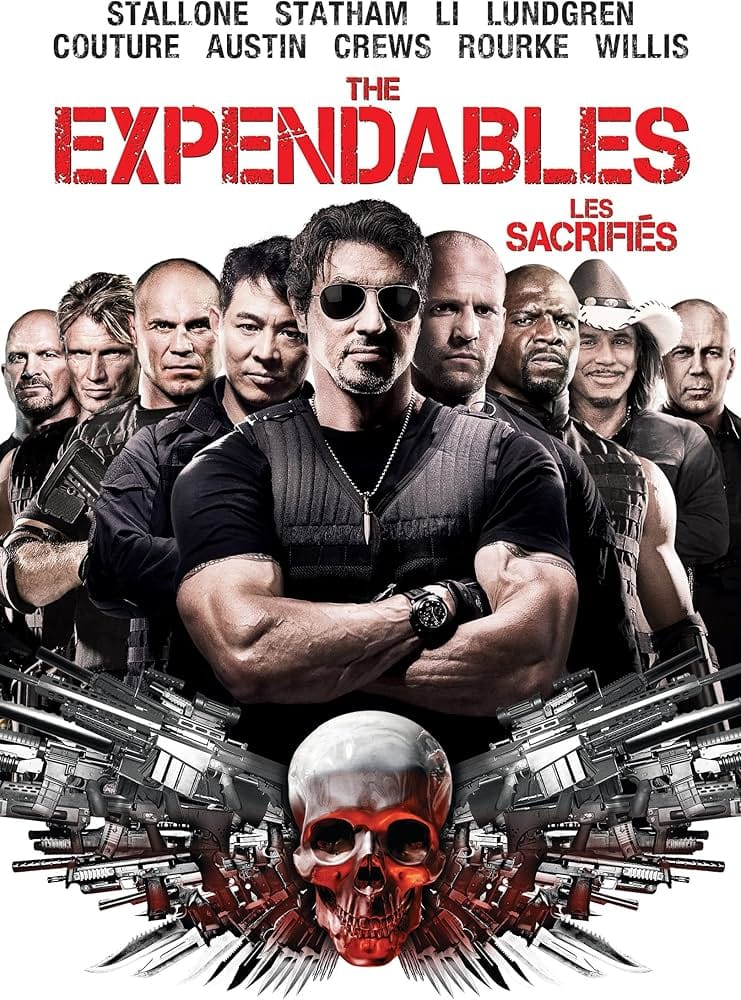


The most recognizable symptom of a system that can no longer sustain itself is this: mercenaries become visible.
So what are mercenaries, really?
At its core, mercenarism is nothing more than an externalized function of sovereignty: violence, coercion, intelligence, control.
Core sovereign functions, exercised outside the official moral, legal, and symbolic framework of the State - or the King - yet still in service of those who retain power.
When a system functions properly, it does not need mercenaries. When it starts to fail, three fractures appear simultaneously.
Legitimacy collapses.
The state can no longer openly assume certain actions. They are too costly politically. Too visible. Too... dirty.
Loyalty erodes.
Internal institutions no longer obey blindly. Too many rules, too much oversight, too many leaks.
Responsibility dissolves.
Action must occur without trace, without a clear chain of command. Acting while denying having acted. At that point, the mercenary becomes the logical solution.
Not an anomaly, but truly a structural patch.
It's important to understand that mercenaries are not a sign of an anarchic world.
They are quite the opposite. They are the sign of a hyper-controlled yet deeply fragile system that can no longer bear its own weight.
The system whispers:
“I cannot do this myself anymore. Do it for me. I will pay you well... And I will look away!”
Language as the first layer of denial
Before understanding mercenarism, one must look at language. Vocabulary is the first camouflage.
"Respectable" names
These are institutionalized terms designed to preserve the illusion that nothing abnormal is happening:
- Private Military Contractor (PMC)
- Security contractor
- Defense Services Provider
- Risk management company
Names like Wagner Group or Blackwater (now renamed Academi) come to mind. The function remains the same, the language is sanitized.
Technical terms
Here, moral weight is removed entirely: operator, asset, field operative, strategic consultant, third-party actor.
This is the vocabulary of intelligence briefings, security assessments, legal documents. Humans disappear, only capabilities remain.
Informal names
Among insiders, the fiction collapses: handler, fixer, cleaner, guns for hire.
The function is acknowledged, no moral narrative required.
I use a more accurate word: the bastards.
A bastard is someone born outside official recognition: outside lineage, inheritance, narrative.
Mercenaries are exactly that, the bastards of the system: unrecognized, unbadged. Without official transmission or insignia. No one want them.
Yet, they structurally allow everything else to hold.
I once wrote about bastard spies, intelligence operators without flag, agency, or title. The people with no place in the official story of the world.
Like children born out of wedlock: they are not the problem.
The refusal to recognize them is the symptom.
Cognitive mercenaries: the invisible layer
The public mostly sees armed mercenaries, the visible, kinetic version. But today, the most strategic layer is elsewhere.
There are cognitive mercenaries.
They do not kill bodies. They organize perception.
Former intelligence officers, former journalists, independent analysts, hackers, influence operators, narrative architects, information fixers, perception managers.
Their role is to shape what others perceive as reality, what becomes legible. They intervene when:
- official services are too slow,
- too exposed,
- too legally constrained,
- or when an institution needs plausible deniability.
They do not necessarily produce false information. They shape frames, prioritize signals, amplify certain narratives, suffocate others.
Cognitive mercenaries operate in the Grey Zone, of course. Their battlefield is your attention, your fatigue, ambiguity and cognitive saturation. And they represent the perfect archetype of what Grey Zone operators are.
I know this terrain firsthand.
Intelligence: from institution to market
Intelligence is no longer solely an institution, it is a market. A market for:
- data,
- analysis,
- human access,
- technical capabilities,
- strategic interpretation.
Because official institutions have become too slow for real-time reality, too legally constrained, too politically exposed.
The need has not disappeared, it just has been externalized.
Today, the value no longer lies in accessing information... it lies in sorting, hierarchy, and meaning.
And meaning can be bought.
These are the troubled waters of the Grey Zone. Where intelligence is not a flag, but a contract, where loyalty is transactional, where alignment is temporary.
Why I decided to talk about this now
Because as the Grey Zone is becoming increasingly more visible, with it, its mercenaries. There are three structural reasons why we see them more today.
1. Geopolitical fragmentation
The world is not bipolar, not even truly multipolar. It is fragmented, unstable, transactional. States cannot control everything alone, they delegate.
2. Technological acceleration
What used to be exclusive to states is no longer exclusive. Technology has made sovereign capabilities portable:
- surveillance,
- cyber operations,
- influence,
- mass data collection.
When a capability becomes portable, it becomes externalizable. And when monopoly collapses, outsourcing becomes quite rational.
3. Legal saturation and decision paralysis
Modern systems are dense with procedures, oversight bodies, compliance layers, legal constraints.
In theory, these mechanisms were designed to prevent abuse. In practice, they produce operational paralysis (and much more).
Mercenaries emerge where institutions cannot move fast enough, cannot take risk openly, cannot afford accountability.
They are not outside the system at all, they are its pressure valves.
The mercenary is the system's mirror
The mercenary is not anti-system. He is the system's most faithful symptom.
He does exactly what the system wants but... what the system can no longer do in its own name.
This is where the Grey Zone begins. A space where action is not illegal in the strict sense, not quite legal either. Simply unavowable!
The mercenary is designed for this: no flag, no uniform, no official speech.
What truly disturbs people is that he dissolves moral categories. Because the mercenary DOES NOT rely on morality or belief. He relies on a contract.
Legal / illegal.
War / peace.
Civilian / military.
Public / private.
These distinctions collapse under contract logic.
The Grey Zone poses no moral dilemma to the mercenary, it offers him coherence. And that is exactly the point most people refuse to see: the Grey Zone is also how the system protects itself when legitimacy fails.
If the operation fails, it is not the state, not the institution, not the decision-maker...
It is a bastard.
And the system denies him.
Stay lucid,
Oriane
Go deeper: What is the Grey Zone? · What is cognitive warfare?
Learn to protect your judgment
Cognitive security is not a theory you read about; it is a practice. The Grey Zone Protocol is my cognitive security training: five modules to see how your perception is shaped, test your first reading, recognise manipulation and decide when information is incomplete. 47 hours, self-paced, built from war reporting and human intelligence.
If this perspective resonated, it’s because it’s part of a longer line of work.
I publish one structured analysis each week. If you want to follow this work week after week, click the button below.