Modern states claim a monopoly on force. In reality, they increasingly outsource it.
Today, some of the most sovereign functions of the state are executed through contracts: security, logistics, protection, even parts of migration management.
From the outside, power still looks centralized, controlled, accountable.
From the inside, it is increasingly distributed, fragmented… and harder to attribute.
To understand what this looks like in practice, I spoke with Morgan Lerette.
Morgan has operated on both sides of the system: first as an Air Force Security Police officer (1999-2004), then as a private contractor in Iraq for Blackwater (2004-2005), then back to the Army as an intelligence officer (2008-2011).
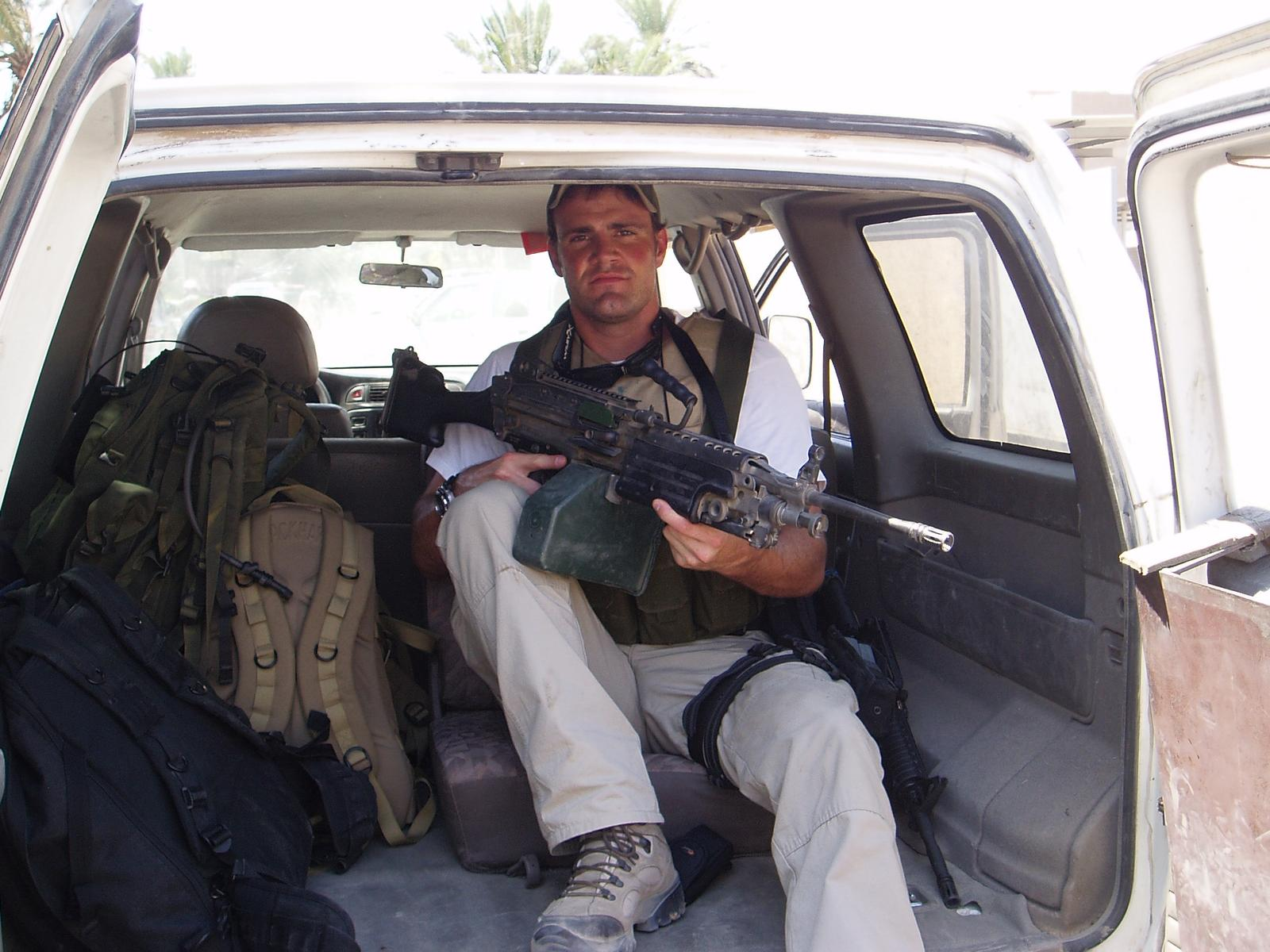
Same environment.
Different structure.
When we started the conversation, I told him I want to discuss how power is outsourced at scale and how does it look like, from the inside.
His first words were:
"Yes, I call it outsourcing morality."
This conversation is not about one war, or one company. It is about a structural shift in how power operates.
In what follows, we will break down:
- The expansion of private contractors in Iraq or how the shift became structural.
- What truly changes on the ground when power is contracted
- The ambiguous state of law in this Grey Zone (and the Nisour Square case)
- Then we move beyond war and will observe how kids are being "lost" when responsibility fragments
- The human and psychological cost of this hybrid system, for those in the inside
- And finally how this affects YOU: when power is distributed, responsibility is no longer where you think it is.
The expansion of private contractors in Iraq or how the shift became structural.
After 2003, the United States faced a growing gap between military capacity and mission requirements.
Stabilization, reconstruction, convoy security, diplomatic protection - these functions required manpower, speed, and flexibility that traditional military structures struggled to provide at scale.
The solution was contractual. Private companies were integrated directly into operations. At the core.
Morgan Lerette saw that shift from the inside. What had started as a military occupation was progressively reframed as a diplomatic mission:
"In theory, you had the State Department at the very top, then you had the Department of Defense, and then you had all of us knuckle draggers underneath it. When they turned over to the diplomatic mission, they said, we don't have anybody that can protect these diplomats."
That need expanded fast.
"It went from 12 people… 20, maybe 25 to 500 overnight. We need 500 people. Let's go."
Private contractors were filling a structural gap in the exercise of sovereign power.
"The State Department needed people to protect diplomats, and they hired us to do it."
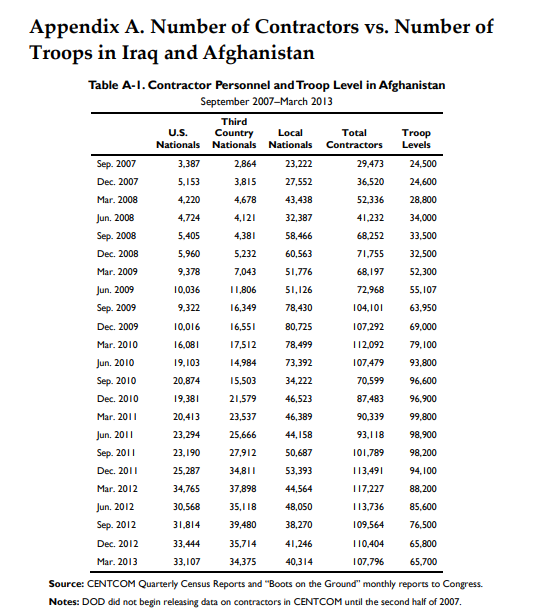
By the end of the 2000s, this shift had reached a measurable threshold.
In Afghanistan, by March 2013, there were approximately 108,000 Department of Defense contractors, representing 62% of the total U.S. presence in the theater.