


On September 6, something happened a few kilometers from where I live.
An inflatable boat washed up on Praia da Foz, south of Lisbon.
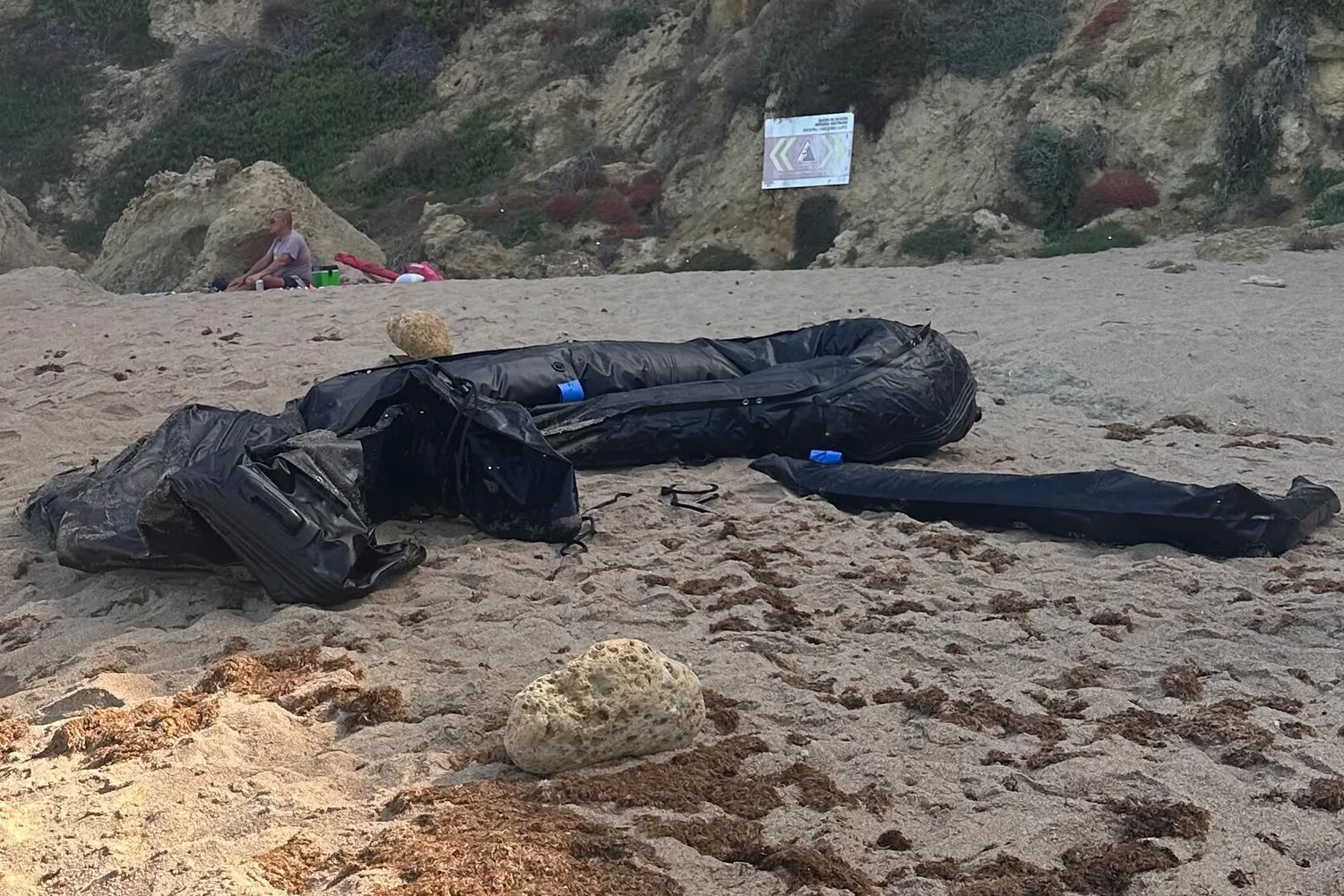
There was nobody in it.
A fisherman raised the alarm during the night. Portuguese maritime police arrived, followed by the GNR. The boat was seized. Authorities reportedly found a jacket, Spanish water bottles and fuel canisters nearby.
And then came the thirty men. Or perhaps they didn't?
Within hours, a story began circulating locally: the fisherman had seen 20 to 30 men arrive on the boat, land on the beach and disappear into the countryside. They were migrants. They had entered Portugal illegally. Nobody knew where they were.
And very quickly, an empty boat on a beach had acquired passengers, an origin, an intention and a destination.
Around here, Facebook still performs one of its oldest social functions: it is the village square with Wi-Fi.
Someone knows the fisherman. Someone heard something from somebody in the police. Photographs appear. Fragments accumulate. People fill the gaps.
By late morning, the story had reached the national media. At 11:59, Portuguese radio station Renascença published a definitive headline:
"Around 30 people land in Sesimbra during the night and escape the authorities."
Other Portuguese media reported essentially the same story.
There was only one problem: by that evening the authorities said they couldn't actually confirm that any of those people had existed.
What follows traces how an unconfirmed report becomes an accepted fact, how influence operators exploit that process, and how an attribution can produce political consequences before the evidence is established.
From an empty boat in Portugal to the fascinating case study of Al-Ahli hospital explosion in Gaza, the question is the same: who gives an event its meaning, and what decisions follow before anyone has verified it?
How uncertainty became fact
That evening, the authorities issued a joint clarification. None of the witnesses interviewed by the authorities confirmed the information about the people from the boat. It was therefore impossible to establish that migrants had landed there at all.
Strip the story back to its components:
- A boat was found on a beach. That is an observation.
- Objects were found nearby. Those are reported physical traces.
- 20-30 people may have been seen. That is an unconfirmed report.
- Those people arrived on the boat. That is an inference.
- They were migrants. That is another inference.
- They entered Portugal illegally and escaped. That is a narrative constructed from the previous inferences.
These categories are not interchangeable. Yet within hours they had collapsed into one another.
This is a form of certainty laundering: weakly sourced information passes through witnesses, networks, journalists and institutions. Each transmission makes it appear more established. By the time it reaches the public, its chain is invisible.
The police search added another layer. Why would the police be searching if nobody had landed? That's the irony: action produced by uncertainty became evidence of certainty.
Later, authorities suggested another possibility. The vessel and objects resembled equipment used in maritime drug trafficking or fuel smuggling. That explanation may prove correct. It had not been established either.
The public now had two stories: 30 migrants had disappeared into Portugal, or smugglers had abandoned their boat.
An event enters a story already waiting for it
The migrant explanation performed well because the surrounding environment had made it available.
Weeks earlier, extraordinary scenes at Ceuta had dominated the Iberian news cycle. Large crowds had crossed from Morocco into the Spanish enclave; images showed young men running through border gates, climbing barriers and moving along the beach.
The empty boat appeared after the public had been exposed to a specific visual sequence: North African men, water, a breached border, overwhelmed authorities and uncontrolled onward movement.
Ceuta supplied the mental footage into which the boat could be inserted.
The rumor that propagated in a few hours in Portugal spread through an environment that was ready for it.
Threat accelerated the process: IF 30 unidentified men entered illegally during the night, forwarding unverified information feels like precaution.
But the more important lesson begins where the rumor ends. If this can happen without a central liar, what becomes possible when organized actors understand the mechanism?
Now introduce an operator
An influence operator does not need to fabricate an event. That's crucial to understand. For people like me, real events are much more useful than lies.
An explosion happens. A child is killed. A hospital is damaged. A convoy is struck.
The operator's task is to capture the event's meaning before the evidence stabilizes. Narrative warfare can be reduced to 3 movements: