

Over the last week, you met seven fictional characters:
- Ines, the night receptionist who worked out a merger at 2am while printing a registration card.
- Karim, the driver who knew about the CEO's departure before the board
- Olivia, the waitress of that quiet hotel bar in Silicon Valley
- Karen, the executive assistant to the chairman of a Washington lobbying firm
- Gary, the night cleaner of that luxury hotel in Miami
- Catarina, the human CCTV concierge in Lisbon
- Tatiana, the Russian interpreter for diplomats
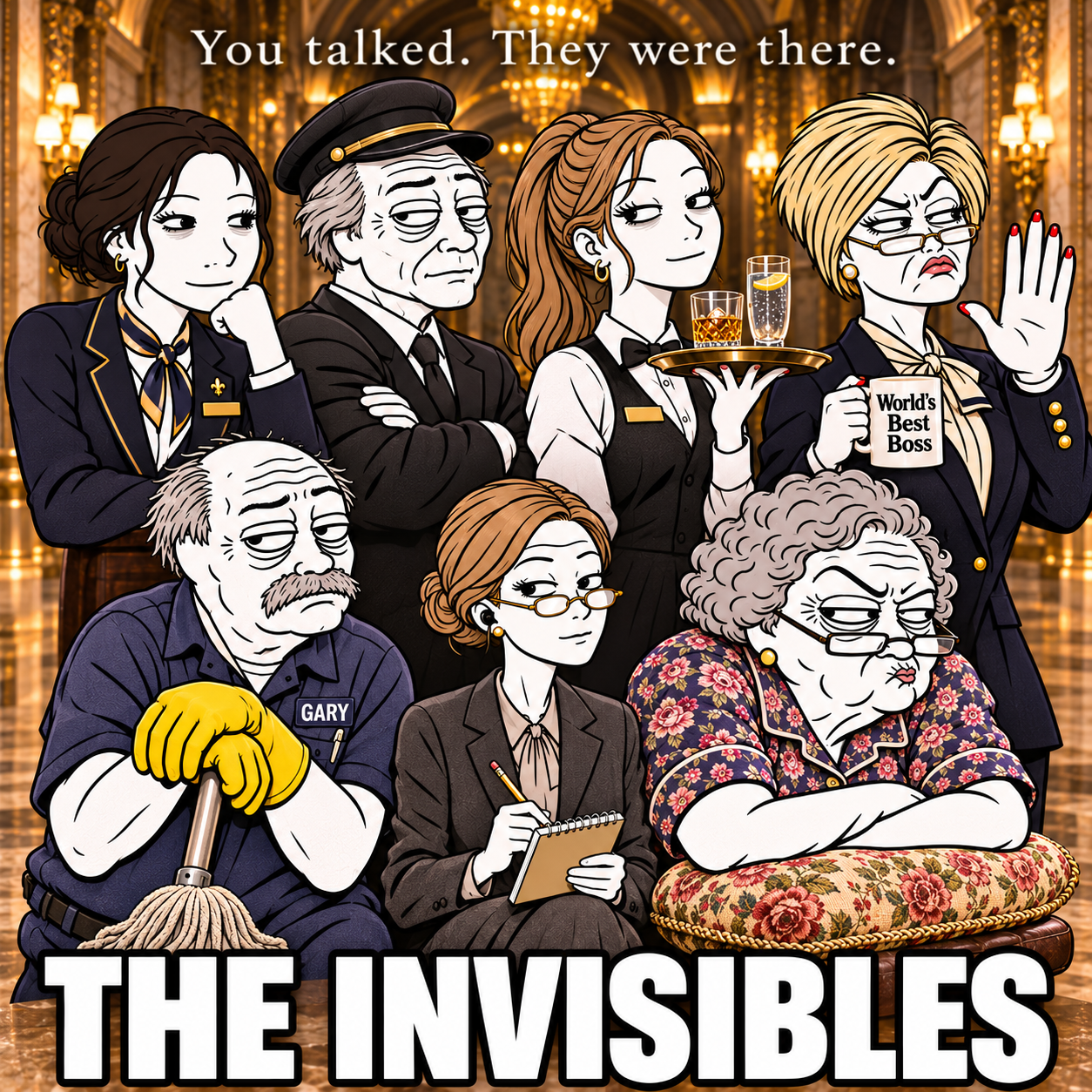
You might wonder why I spent a week on receptionists and chauffeurs, when the world gives us wars, elections and markets to analyse every day.
This letter is the answer.
What I did with the series is simple: I took your attention, which naturally goes to the CEO or "powerful" person in the picture, and I redirected it. For one week, the main character was the person at the edge of the frame.
Look at the images again.
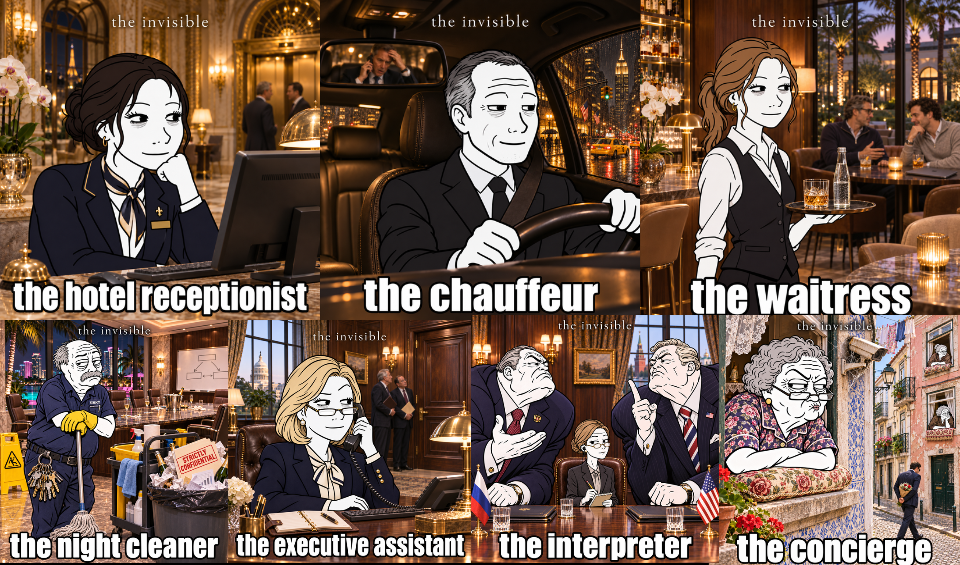
The "powerful" are in the background, in the rear-view mirror, at the table behind the waitress.
Nothing in the scene changed. Only where you were looking. That reflex, reorienting your perception, can be trained.
It's the one I wanted to leave you with.
What you were really looking at
Humour lowers the guard, and I needed your guard down for what I actually wanted to do: make you recognise people you already know. Because you do know them.
You've handed over your coat, sat behind a driver with your phone pressed to your ear, walked past someone cleaning the office without quite registering that they were there. You've met Olivia, Catarina and Tatiana under other names, in other bars, buildings and negotiating rooms.
I didn't make this series so that you would start suspecting them. These people are not spies. They're just invisible to most people.
In HUMINT, these roles matter for two reasons: