

This morning, we woke up to a ceasefire. Two weeks. After thirty-nine days of war.
But the war did not stay confined to the battlefield. It moved, and it moved fast.
João runs a tiny café in Portugal. A modest place, thin margins, surviving on his regulars. He told me suppliers had raised prices again, and that he was worried.
João doesn't follow geopolitics. But he is already inside the consequences of this war.
That is where this conflict lives.
Not only in Tehran, Tel Aviv or Washington. But in fuel, transport, margins, inventories, pricing decisions, and quiet anxiety among people who have never opened an IAEA report in their lives.
So before asking whether the ceasefire means peace is coming, we need to ask a more serious question:
what did these thirty-nine days actually do to the system?
The ceasefire is the visible layer. The system has already moved underneath.
Most people will read the headlines. Very few will understand what has already changed.
What follows is a structural reading of the consequences of that war:
- what these thirty-nine days actually did to the system
- what is already unfolding, quietly and without attribution
- and where the real exposure now sits for investors and decision-makers.
What actually happened: a system shock.
The core event was systemic.
Hormuz was closed, and the system reacted immediately. That single chokepoint was enough to: disrupt global energy flows, increase prices and propagate costs into daily life.
You do not need a global collapse: just one constraint, at one critical node, is enough to move the entire system.
Some flows were redirected to other critical maritime checkpoints:
- Bab el-Mandeb
- the Red Sea corridor
- the Cape of Good Hope
- the Malacca route (indirectly)
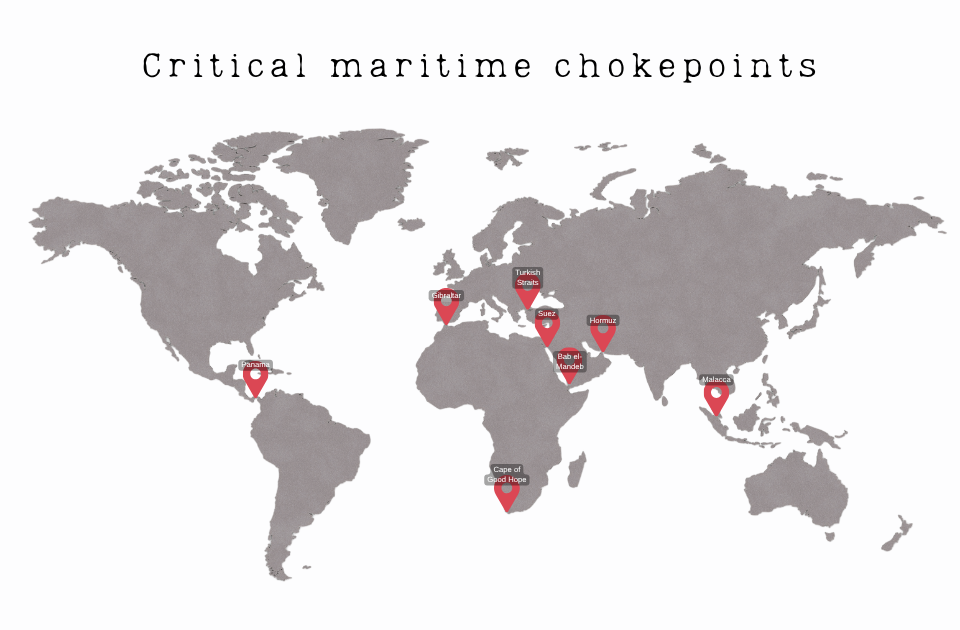
It redistributed the risk across other critical chokepoints.
During these thirty-nine days, the closure of Hormuz cut off nearly 21 million barrels of oil per day (roughly 20 % of global supply).
From there, the transmission was immediate and mechanical:
Energy cost spiked → transport rates jumped → suppliers prices rose → businesses absorbed or passe the pressure → consumers paid the bill.
This shock also accelerated structural shifts.