


March 17. Joe Kent resigns as Director of the National Counterterrorism Center. His argument: Iran was not an imminent threat.
March 18. The U.S. Intelligence Community publishes its Annual Threat Assessment 2026. Its position: Iran does not need to be an imminent threat, it is framed as a permanent one.
Two days, two official statements.
Same country.
Two incompatible readings of reality.
Leave alone the timing, they are not answering the same question:
- Joe Kent is asking: is there evidence of an immediate attack?
- The system is asking: is this actor fundamentally incompatible with us?
One works with signals, timelines, probabilities. The other defines what constitutes a threat in the first place.
This is the main fracture.
The real topic behind this fracture is what is called, in IR academic terms "ontological securitization".
I know, it sounds abstract, but I swear it's not.
Bear with me.
I first worked on this concept +10 years ago, in an academic setting. The topic of my thesis was ontological securitization, I took Israel as the case study.
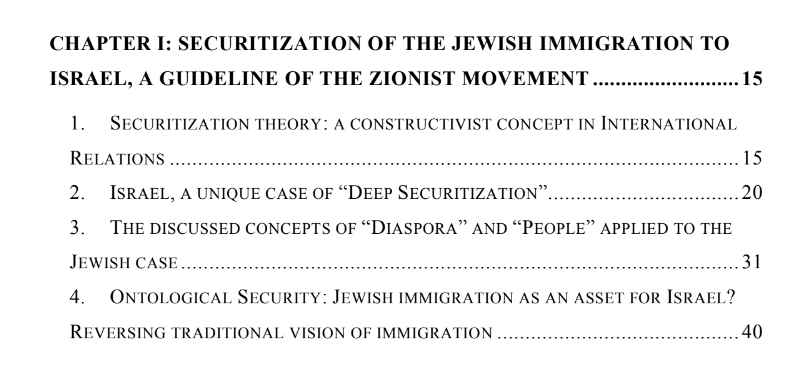
What follows is what remains after years of observing how these mechanisms actually operate, at a larger scale.
In this brief, I will break down three things:
- The fracture: why Kent and the ATA are not contradicting each other, but operating in two different models of reality.
- The mechanism: how Kent moves from analysis to association when his framework reached its limits (and why this opens the door to narrative capture by actors like Tucker Carlson)
- The shift: how the ATA reframes threat at a structural and ontological level, and why this changes the nature of conflict itself.
Kent is right. And Kent is wrong. Simultaneously.
From his own perspective, Kent is doing the job correctly. He looks at signals, timelines, capabilities vs intent and concludes: "well, I'm sorry, there was no imminent attack."
That's not wrong. That's even disciplined. That could be perceived as intelligence work.
But it's not.
In intelligence, analysis is always anchored to a PIR (a Prioritized Intelligence Requirement). That's basically the question from the decision-maker (the final user of intelligence) that must be answered.
The ATA is not asking whether Iran is about to strike - tomorrow, or the day after. It is building a different case.
More subtle, but far more consequential:
The document explicitly defines Islamist ideology as a "fundamental threat to the principles that underpin Western civilization."
And this is where most people completely miss what is actually happening.