


Years ago, I was meeting an asset who had become close to me. He trusted me, he was attached to me. He knew parts of me - real parts - but not the whole... I was undercover.
If I am being completely honest, I was attached to him too.
The mission required an action that would have harmed him. In that moment, the choice felt obvious: I would protect the relationship. I told my superior we still needed him. That we had alternatives.
But my superior disagreed. He reminded me that "this was not my friend" and that "loyalty belonged to the mission". He looked at me and said:
"You're not here to be loved. Remember the mission."
I obeyed. Because that's what you do when you're a "good soldier".
But that sentence split something open.
I had invested months building that relationship. I had calibrated, listened, adapted, revealed just enough truth to make the bond real. And now I was expected to weaponize it.
The question that emerged in that moment has never left me:
when does adaptive identity stop protecting you and start eroding you?
This piece isn't about espionage or loyalty as such. It's about identity under pressure: the discipline of controlled exposure, and the role of narrative in environments where visibility is constant and stakes are high.
It is an examination of identity under pressure: how it adapts, how it protects, and how it can slowly erode.
1. Identity as an interface
2. Pressure designs the interface
3. The CORE is forged through fracture
4. The hidden cost of modularity
5. The real risk is cynicism
6. The tools for leaders
Identity is an interface
Identity is not a fixed "given". It is an interface you learn to operate.
You already know this:
- You don't speak to your board the way you speak to your spouse.
- You don't negotiate the way you comfort a child.
- You have different roles, depending on the context.
But operationally, it goes deeper. Identities aren't "roles" to "act". You live them, you embody them truly.
These identities calibrate under exposure. For me, it manifests most visibly through language. When I switch languages, my syntax changes. My humor changes. My moral framing shifts slightly.
Depending on the language I speak, I am not the same person.
In French, I can have different kind of identities depending on the level expected: I can move from academic precision (layered nuance, high vocabulary density, surgical conceptual clarity) to street slang in seconds. I can speak like a policy analyst or like someone who grew up on the edge of chaos.
In English, no matter what I say, I sound cute because of my french accent. Which gives me tremendous leverage as people project "cuteness = stupidity".
Each version is real. None is fake. My identity is modular and language is one of the entry point to these various versions of me.
So does speaking multiple languages change who you are? Short answer: YES. I believe, and this is personal, that speaking languages is a superpower.
Languages shape how you think and every language comes with its own cognitive framework (history, culture, vocabulary, humor etc). When you switch languages, your brain switches gears. You see the world through different lenses. You're not "becoming someone else", you're activating different versions of yourself.
For HUMINTers, the ability to "fit in" linguistically means you blend naturally, which is a key to building trust and gathering information. People open up to those who "get" their frame. Speaking their language fluently, including gestures and tone, creates trust.
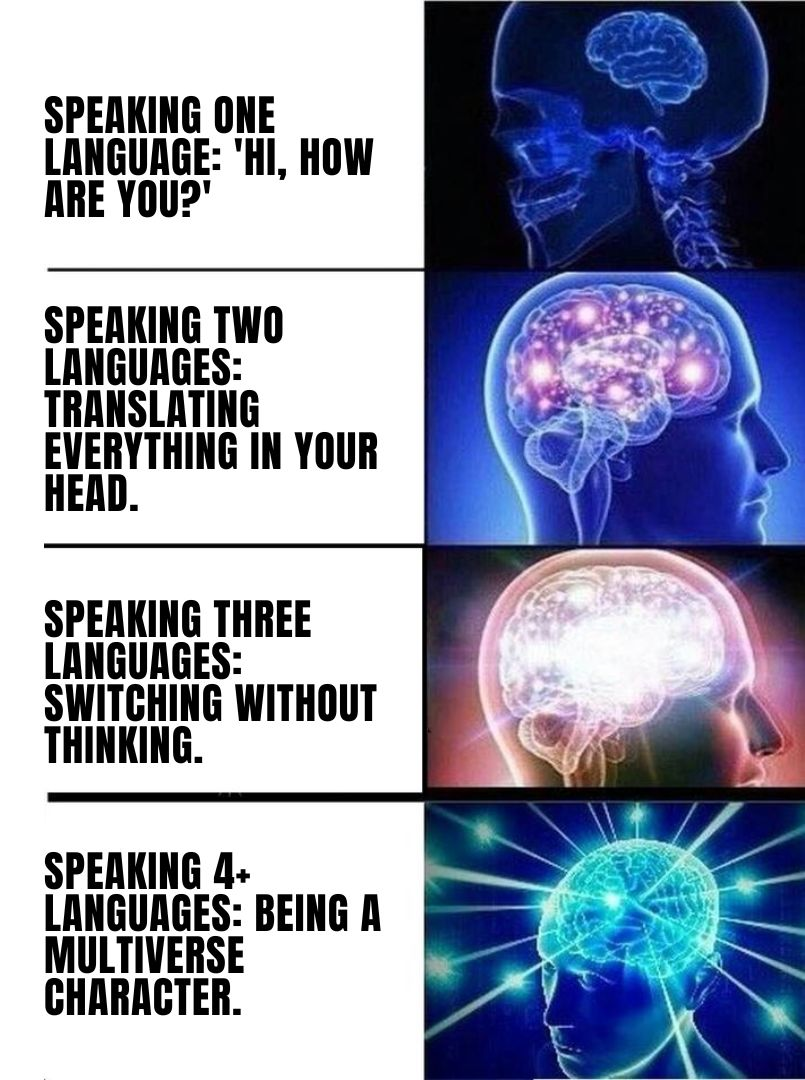
The problem is not modularity, the problem is unconcious modularity. Because when you don't control the shift, context controls it for you... And context has no loyalty!
Pressure designs the interface
People who grow up in stable environments often develop linear identities. People who grow up in unstable environments develop radar.
They learn:
Not now.
Don’t say that.
Watch the tone.
Adjust.
For many, the Grey Zone begins in childhood. It begins in the first carapaces you build in response to parents, teachers, classmates. The first time you realize that showing too much invites danger. The first time you realize that withholding buys safety.
Identity shifting is often born in survival.
Espionage didn't teach me to shift identities. It revealed I had been doing it since very young. That skill becomes power later in life:
- You read micro-signals faster.
- You adjust without friction.
- You build trust rapidly.
But there's an inherent risk to that ability too: if you become excellent at adaptation, you can start believing there is no core. That everything is negotiable.
Including you.
The architect of your identity is context and pressure.
That's where the full analyses, frameworks, and case studies are. Subscribing gives you access to the entire Grey Zone library, not just the public signals.
The CORE is forged through fracture
The core is not what you declare. It is what survives temptation.
Let me tell you another story.
On a later mission, I accepted work I wasn't aligned with at all. But it was intense and exotic. It was for me a chance to prove I could deliver under pressure.
I was not aligned with the client's deeper objective. Yet, I accepted for thrill. For validation. And for money.