

The International Energy Agency (IEA) published a report, on March 20th, 2026.
This is not a "regular" report. It's more of a set of instructions. Not for governments, but for you.
It outlines how populations are expected to adapt when energy stops being abundant.
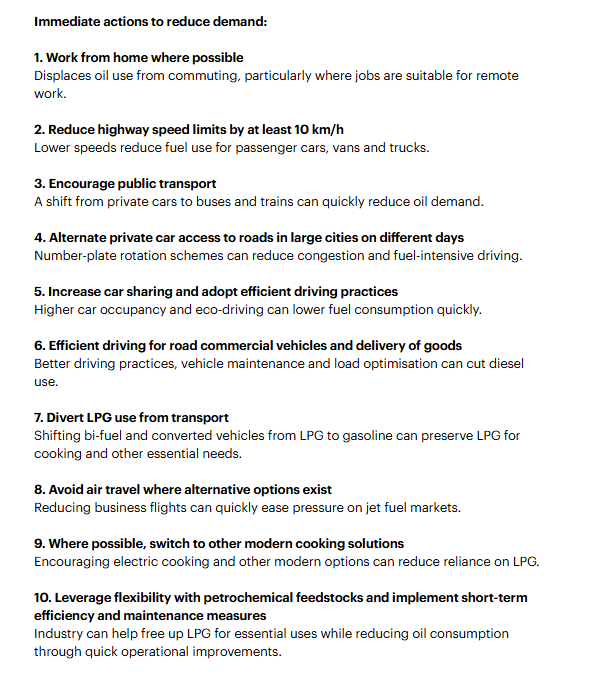
The executive summary of their website go straight to the point (for those who don't "have the energy" to read the full report), it gives direct behavioral recommendations:
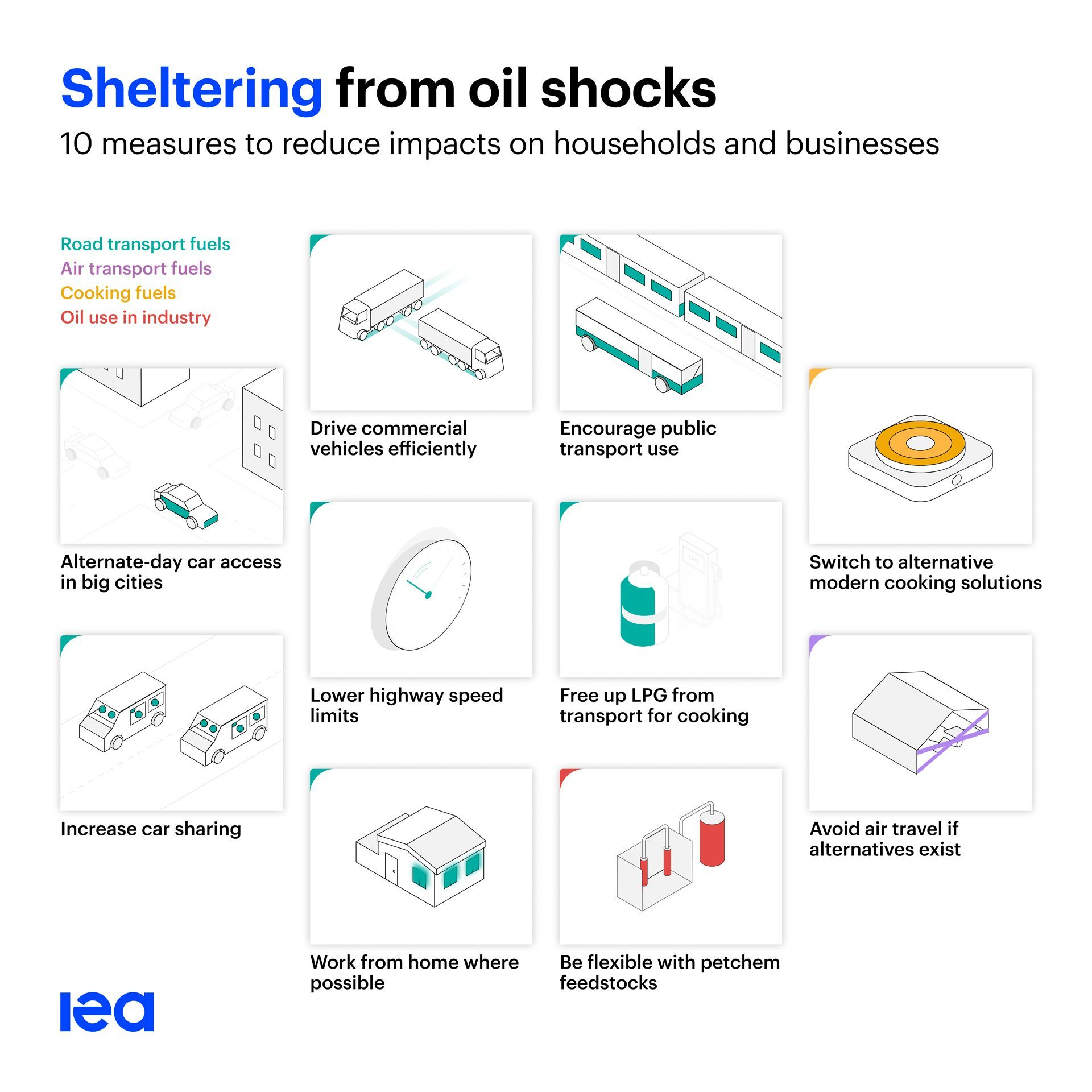
The infographic says the same thing, with even fewer words, ideal for social medias:
That is enough to understand what is coming.
But it's not where the document actually lives.
I read the full report and dissected it for you: what it is explicitly asking you to change as a citizen starting NOW, where the pressure really sits (and why), and what the document carefully avoids saying.
It starts with a fact nobody can absorb.
It's not developping "hypothetical crises scenarios" - the document is operational. Take it as a manual presenting a logic of soft rationing.
The Strait of Hormuz slows down, flows collapse. Roughly 20% of global oil supply is suddenly constrained. Prices spike. Diesel tightens. Jet fuel tightens. LPG - the fuel millions use to cook - becomes fragile.
There is only one solution: restore flows. But the document does not focuses on that. It focuses on you.
The structure of the document
It moves from: "how do we produce more?" to: "how do we consume less?". And that changes everything because production is geopolitical but consumption is behavioral.
The document operates on three layers.
- First, they stabilize the system just enough to avoid panid.
- Second, they turn to... you. And that is the core of the document, how to adapt the behaviors of civilian populations.
- Only then, do they takj about rebuilding (or reconfiguring) the system (electrification, efficiency, substitution).
What you are explicitly being asked to do
Forget the formal tone, the technical jargon, and look at the actions. At this stage that these actions aren't "forced". They are highly suggested.
There are four main categories of behaviors the document is inviting you to change, immediately:
A. Road transport: the real battlefield
Why? Because it reprensents ~45% of global oil consumption. So the system goes straight there. You are expected to: