

2025 was NOT a year of chaos.
2025 was the year the Grey Zone became the default operating mode of the global system. The reversal point has already been crossed.
So for 2026, I will be watching structures and systems.
And most importantly, the humans inside those systems, the moment they start changing how they decide, justify, and delegate.
What follows is a map of the architectural mutations I'm paying attention to in 2026:
TL;DR
- PART I - Four architectural ruptures (and their human entry points)
- PART II - Zones of maximum uncertainty
- PART III - What 2026 will reveal about the era
PART I - Four architectural ruptures (and their human entry points)
1. The consolidation of Grey Zone actors
Not states. Not corporations. Not classical networks either. But Grey Zone actors. What changes in 2026 is their centrality.
Grey Zone systems operate through individuals capable of navigating multiple systems of loyalty at once, without internal fracture.
This does not mean more Grey Zone operators appearing in the news. The one operating in the most troubled waters will stay in the dark, but you'll have to recognize the patterns: their "signature".
You see it when:
- decisions are influenced without clear authorship,
- coordination happens without formal alignment,
- outcomes occur without a clear chain of command,
- responsibility is dispersed but effects are precise.
Power operates through interfaces, intermediaries, and informal trust networks. Recognizing the SIGNATURE matters more than identifying the actor in 2026.
And remember this: while this is happening, institutional power becomes secondary, reactive, and often symbolic.
2. The erosion of institution(s) assumed to be "structurally stable"
Institutions fail when the people inside them stop treating their outputs as meaningful guides for action.
The signals are never official. They are HUMAN:
- language becomes cynical,
- responsibility is quietly pushed downward,
- risk avoidance replaces judgment,
- decision-makers stop owning consequences.
Across many international organizations, institutionalized NGOs, and renowned think tanks, production has not slowed.
Actually, reports accumulate. Frameworks multiply. But the knowledge produced no longer functions as an instrument of orientation.
In 2026, institutions do not disappear. They will continue to operate while losing the capacity to orient decisions.
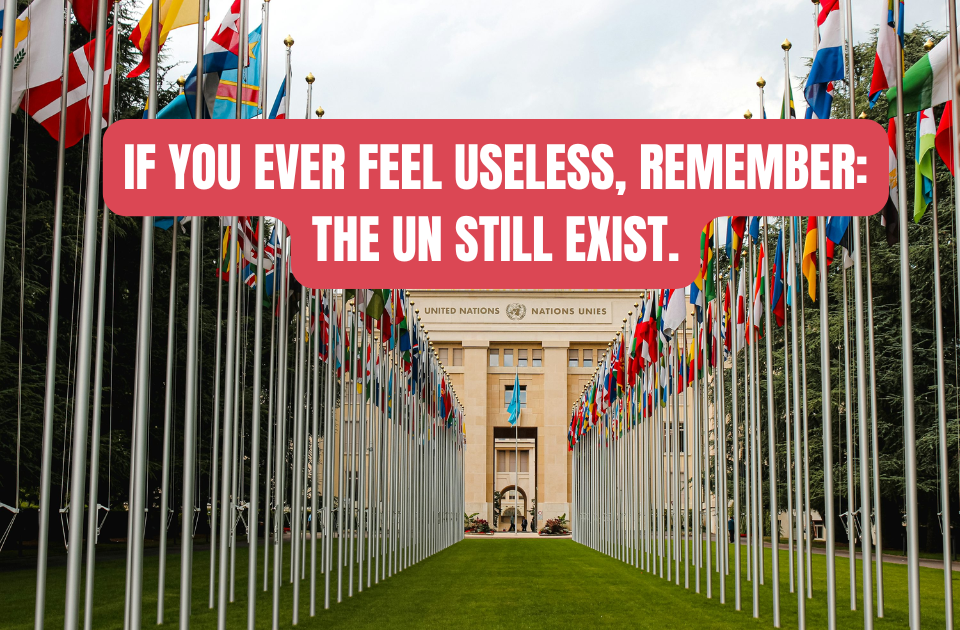
2026 will mark the erosion of institutions believed to be:
- too central to fail,
- too integrated to collapse,
- too symbolic to disappear.
3. Geopolitical coalitions that seem "unthinkable" today
Coalitions emerge from shared constraints and converging interests.
But before States align, individuals do.
Informal trust develops, personal affinities override doctrine, converging fears reshape loyalties.
The signs we can already observe are not official treaties or declaration. They are unusual dialogues, discreet coordination, and converging language between actors not supposed to align.
This is HUMINT territory by definition.
4. A technological mutation that redistributes power
Technology reshapes power only when humans decide to:
- delegate their perception,
- outsource their judgment,
- accept opacity,
- relinquish their responsibility.
When decision-makers trust systems more than their own reading of reality,
power shifts. Errors stop being owned.
They are explained away as "systemic" and "inevitable".
2026 may not introduce a new technology per se, but it may mark the moment when humans cross a delegation threshold that becomes difficult to reverse.
PART II - Zones of maximum uncertainty
The most dangerous zones are not the "obvious" ones. They exist wherever stakes are underestimated, where governance is thin, porous, where escalation thresholds are undefined.