


Over the past few weeks, I've received messages circling around the same problem:
How do you follow what's happening in the world without drowning in it?
How do you filter information without disconnecting?
Wars, markets, political crises, rumors, videos, expert threads... everything now arrives in the same feed, at the same speed, with the same emotional intensity.
Our brains were never designed for that.
TL;DR
1) The reason you feel saturated
2) Reality moves in FLOWS
3) The three layers of reality: structure, signal, noise
4) A personal note on my field experience
5) The actionable method you can implement
6) The ideal daily ritual (20 minutes)
7) Conclusion
The reason you feel saturated
Cognitive overload does not come from "too much information". It comes from too little hierarchy.
When everything feels equally urgent, your nervous system switches into survival mode: hyper-vigilance, compulsive scrolling, anxiety... It often leads to paralysis, procrastination, sometimes even, nervous breakdown.
You're overwhelmed, and it's normal. You are responding to a system that removed the layers of reality. To regain clarity you need to rebuild those layers. To give the world back its structure.
Disconnecting is one response to protect the nervous system, yes, but it also blinds you. What you need is to build a filter that lets reality in while keeping manipulation out.
Reality moves in FLOWS
Energy flows. Capital flows. Logistics. Demographics. Technology. Military capacity. Narratives...
Tracking flows means reading reality upstream of the narrative.
Following headlines means reading it after the fact.
What you see in the news are outputs. Systems move through inputs and constraints. When constraints shift, outcomes must follow, often with a delay... sometimes with violence.
If you only look at what just happened - the visible events - you are late. You are reading the past. When you watch the variables that make things happen, you are reading what the future is allowed to be.
Anticipation is an accurate reading of systems. Understanding what has become impossible, and what has become inevitable.
That is what makes the difference between being informed and being positioned.
The three layers of reality
Every piece of information belongs to one of three layers:
1) Structure
What changes slowly but shapes everything: the flows we talked about. This is the deep architecture of the world.
2) Signals
What indicates that the structure is starting to move. Policy shifts, deployments, economic breaks, technological jumps... This is where change becomes visible.
3) Noise
What triggers emotions but rarely changes outcomes. Algorithmic media, social media... anything optimized for reaction rather than structure.
For me, even the noise is informative - in controlled doses. Because it reveals where collective attention, fear, and desire are moving. That is the noetic dimension of reality: how perception organizes itself at scale.
The problem is that most people live inside the noise while thinking they are informed.
Their attention is constantly captured. That is why people can read everything and understand nothing.
A personal note on my field experience
For those who don't know: before entering the field of intelligence, I worked as a field journalist in Israel and the West Bank. My first years were in what we call hard news. The "breaking" events.
That meant something specific in practice: you don't "follow the news". You are physically sent to it.
Every day, on the move, one location, then another. Meeting this person, filming that one.
Sometimes arriving somewhere because something might happen...
Sometimes staying for hours even when nothing happens, at all!
I've spent days on the ground with a cameraman, to capture a few minutes of usable footage. A few images strong enough to justify the story.
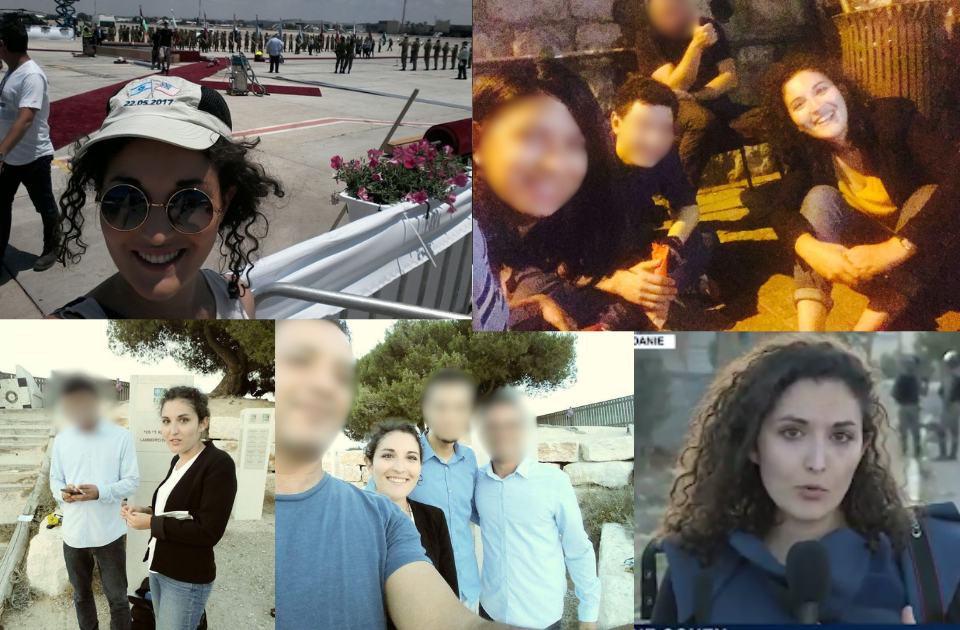
The rest of the time, reality is flat. Waiting, repetition, nothing dramatic. But on screen, the audience is told all day long:
"Something is happening."
"Tensions are rising."
"This is a critical moment."
I know what sits behind those headlines. I know the gap between the intensity of the narrative and the thinness of the actual event.
I also learned that the events that matter most are often the ones without journalists. Because they're not allowed in. And because they produce no images.
No camera on site means no footage → no footage means no story →
and without a story, reality disappears.
It is particularly true for TV journalism: if it's not "visual", no news.
That's one of the deepest distortions of the modern information environment:
visibility has become a proxy for importance. This is one of the reasons why I don't trust continuous "hot news" loops.
Back to the point!
Once you've learned to see that difference on the ground, you can't unsee it in the information environment.
The method: how to rebuild clarity
Most people don't need exhaustive intelligence. Most people need the "big picture", enough clarity to make good decisions and position themselves correctly in a moving world.
For these people, you need a simple system with three separate streams: