
“Grey zone” is a term widely used in security studies and geopolitics. But it has never been rigorously defined.
Not as a metaphor.
Not as "the space between war and peace."
But as a model of how power operates in complex systems.
What it is: the Grey Zone definition
The Grey Zone is a structural configuration of power that emerges in fragmented, interdependent, non-linear and informationally saturated systems, where actors gain strategic advantage by operating through designed ambiguity, avoiding attribution, and synchronizing influence across multiple domains to shape perception and block conventional response.
It is not a theory of war.
It is a theory of power under complexity.
The 5 necessary conditions
A situation qualifies as Grey Zone only when five conditions are simultaneously present:
- Liminality: Action sits between recognized categories (legal/illegal, war/peace, public/covert).
- Strategic ambiguity: Uncertainty is produced intentionally.
- Non-attribution: No actor can be publicly and definitively held responsible.
- Cognitive targeting: The objective is to shape perception, coherence, or legitimacy.
- Multi-vectorial pressure: Several levers are activated at once (legal, narrative, economic, cyber, diplomatic, organizational).
All five present? You are in the Grey Zone.
If one is missing, you are in something else.
The 3 structural axes
The Grey Zone operates along three axes:
1. Ambiguity as a strategic resource
The Grey Zone operates by exploiting ambiguity with INTENTION. On the legal, political, moral, institutional realms. Ambiguity neutralizes resistance. Therefore, it's an excellent tool. It allows actors to move freely while others are stuck debating definitions.
2. Influence without attribution
In the Grey Zone, power hides its authorship. Actors shape decisions, narratives, and alliances without appearing anywhere officially. It's about proximity, access, and deniability, not visibility or recognition.
3. The cognitive terrain as the primary battleground
The objective is not territory, but perception. The battlefield is the mind... and the architecture of coherence itself, that defines what the mind accepts as real.
The 4 domains of application:
The same structure operates across scales:
- Geopolitical: proxy conflicts, cyber ops, coercion, deniable influence
- Organizational: Internal power plays, restructuring, sabotage
- Interpersonal: Manipulation, triangulation, undefined relationships
- Psychological: Cognitive dissonance, internal contradictions
Why it became dominant
The Grey Zone is not new. What changed is its centrality.
Three structural accelerators:
1) The technological acceleration creating regulatory vacuums.
2) The fragmentation of shared reality through decentralized narrative warfare.
3) The erosion of institutional legitimacy.
When categories collapse, ambiguity becomes the default operating system.
In-depth exploration
- The full conceptual architecture
- Learn to navigate the Grey Zone (protocols and courses)
- Read weekly analyses and case studies from the Grey Zone
- In the mind of a Grey Zone Operator (profiling)
Fundamentals corpus:
- Fluidity of power in the Grey Zone
- The Grey Zone and the Law (architecture of fraud)
- Grey Zone and triangulation
- Truth, power, and perception
- Perception shapes reality: the reflexivity theory by George Soros
- Cumulating "frames of references" or the ability to perceive reality from an infinite number of angles
- How to talk across frames: dialogue beyond worldviews
- How to answer the question behind the question
- How to develop an advanced perception
- Identity shifting: the art of shaping your reality
- Language in the Grey Zone and use of jargon (Karp)
Case studies
 Oriane Cohen
 Oriane Cohen
 Oriane Cohen
 Oriane Cohen
 Oriane Cohen
 Oriane Cohen
 Oriane Cohen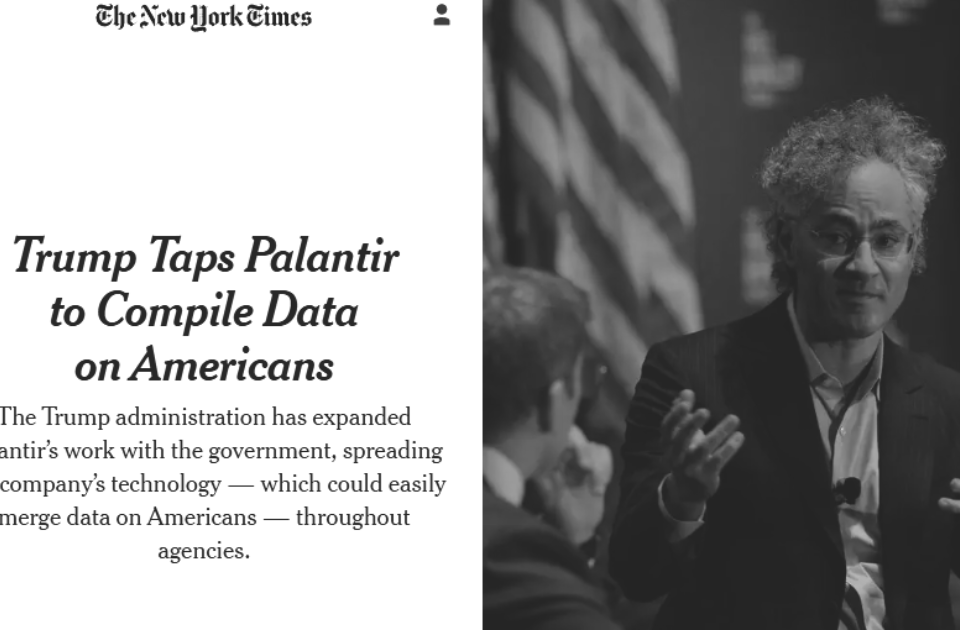
 Oriane Cohen
 Oriane Cohen
 Oriane Cohen
 Oriane Cohen
For decision-makers
If you're operating in environments where:
- Threats are real but unattributable
- Adversaries operate without fingerprints
- Conventional responses are blocked by ambiguity
- You're being targeted but can't prove it
You're in the Grey Zone. You can contact me.